


Related WordsSynonymsLegend: Switch to new thesaurus Noun 1. Windows XP has not received security patches since 2014. As of April 11, Windows Vista is following suite. We show you five ways to safely use your unsupported XP or. Please use the current Audacity version for Windows Vista. This page outlines computer requirements and possible issues using Audacity with Windows Vista. CIS Partners. Clark Information Systems. 1840 South Highway 92. Sierra Vista, Arizona 85635.
Even with a minimalist setup, getting all the separate hardware and software components to work together smoothly can be tricky. One component’s manual might not pick up exactly where the other one left off, and there are very few manuals that will discuss how to optimize your system overall for the best performance.
Optimizing Your Computer for Audio. You can’t walk into a car dealership and buy a car that’s ready to enter a race. Even high-performance sports cars come tuned.

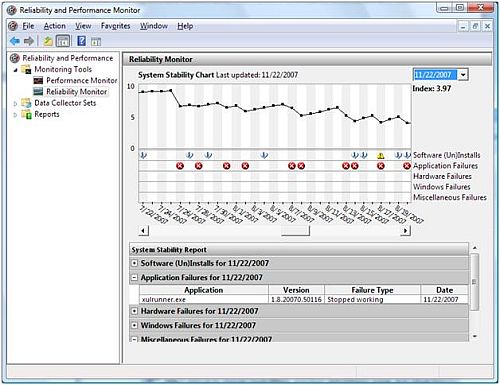

In this article, we'll cover some measures you can take to optimize your system for maximum performance, prevent audio dropouts, and manage latency. Even high- performance sports cars come tuned for the road, not the racetrack.

The suspension, gearing, and timing all need to be tweaked before a car is ready to be pushed to their limits. While most new computers will perform well right out of the box, whether you buy a Mac, or a PC, you still have some work to do before you’ll see your new computer perform to its maximum potential.
Performing and mixing music is one of the most demanding tasks you can ask of your computer, sometimes more taxing than professional graphics and video work. Before you begin, make sure that your software and your audio device drivers are up- to- date. Of course, visit numark. Don’t let your computer’s boot drive get too full. This is crucial to maintain system speed. If your main hard disk gets more than 8.

External USB and Fire. Wire drives are more affordable than ever. Internal drives are even less expensive! While you’re at it, buy an extra drive just for backing up! Get more RAM. On a DJ computer, you’ll want to have more than that so your power- hungry applications have all the resources they need. GB is a great place to start. If you’ll be using lots of virtual instruments, samplers, and other sound generators, you’ll want to get even more.
InfoVista - Network Performance Orchestration solutions for IT-intensive enterprises and communication service providers. If your PC or Mac is running slowly, it's typically the result of a either a software problem, an operating. This is a performance update. Install this update to improve the performance of Windows Vista in certain scenarios.


Is there such thing as overkill? At this point, yes, there is. While many of today’s computers can accommodate 8.
GB or more RAM, even in virtual instrument and sample- heavy projects, it’s almost impossible to use up that much RAM. For the most part, the only time you’ll need 8.
GB of ram is in video and 3. D- modeling applications. Place your library on a second hard disk. Certain files on your computer change all the time, such as your email, internet search history, and bookmarks. Other files stay more or less the same.
These include music and photo libraries, and large audio files. Your system will perform better and won’t have to work as hard if you get a second drive to house your library. This will result in less fragmented drive space, and faster loading and writing of large files.
This is also makes things easier when it comes to backing up your files. Use the best ports on your computer for recording devices.
Generally, ports on the front of the computer, on the monitor, or keyboard don’t perform as well as those on the back. This can help prevent noise, dropouts and connection issues. Not all Fire. Wire ports are considered equal. If the port on your computer performs poorly, or your device has problems being recognized, consider purchasing a new Fire.
Wire card. If necessary, upgrade to a premium USB cable. If you are in an area that has a high level of radio or electrical interference, and you experience noise or hum when using USB audio, upgrade your USB cable to a premium cable with extra shielding and a ferrite bead (a cylindrical bump on one end of the cable), which can filter out some external noise. If your computer isn’t up to date, it’s performance will likely suffer. Go to windowsupdate. It may take a few visits to the site to get all the fixes to the updates (install updates and then do the Windows Update scan again). This will include virus protection, spyware protection, and more. While recording, it is advisable to exit from these.
Right- clicking any of these icons, choose it so that you have exited out of any background programs. You can double- check which applications and processes are running by looking at the Applications and Processes tabs of the Task Manager. If your hard drive goes to sleep (stops spinning to save power) while you are recording, your recording will be interrupted. Click on the Start Menu at the bottom left of your screen and select . Set the Turn Off Hard Disks option to . The last thing you want is for a 1. MB update to start downloading in the middle of a recording session.
Open the Automatic Updates control panel, and select Turn off Automatic Updates. This means that it's up to you to manually check for updates yourself. All you have to do is either revisit this Control Panel, or go to windowsupdate. Wireless cards in computers automatically scan the airwaves for available networks. This take up some of your system resources and can sometimes hurt performance.
If a removable wireless networking card is being used on a laptop, the card can simply be removed. If you are on a wireless network, and the card is internal, you can disable the card in the device manager while you record. It's easy to turn back on when you’re not recording.
While they look nice, these effects can actually be just as demanding or more demanding on your computer's system than many professional level programs available on the market. Performance on even the highest- end systems can suffer if too much demand is placed on the processor(s) at once.
Disabling these graphical effects is one step towards getting the highest level of performance out of your existing computer. To disable the aero effects. Click on Open classic appearance properties for more color options. Under Color scheme, select Windows 7 or Vista Basic. Under Theme, select Windows Classic from the drop- down menu.
This will include virus protection, spyware protection, etc. While recording, it is advisable to exit from these. Right- clicking any of these icons will bring up a menu.
If there is a Close, Exit, or Quit option for any of these icons, choose it so that you have exited out of any background programs. You can double- check what applications and processes are running by looking at the Applications and Processes tabs of the Task Manager. To access the Task Manager, press Ctrl+Alt+Delete, and then click . The last thing you want is for a 1. MB update to start downloading in the middle of a recording session.
Open the Windows Updates control panel. Then, on the left- hand side of the window, click . All you have to do is either revisit this Control Panel, or go to windowsupdate. Wireless cards in computers automatically scan the airwaves for available networks. This take up some of your system resources, and can sometimes hurt performance. If a removable wireless networking card is being used on a laptop, the card can simply be removed. If you are on a wireless network, and the card is internal, you can disable the card in the device manager while you record.
Its easy to turn back on when you’re not recording. Then click Change plan settings button, and set Put the computer to sleep to Never. Then click Save Changes. This takes up some of your system resources, and can sometimes hurt performance. It's easy to turn back on when you’re not recording. Its easy to turn back on when you’re not performing.
Your Mac may pick some inconvenient times to start a backup. Select the Time Machine System Preferences Panel, set . This will free up the most memory possible for your recording apps.
You can monitor how much of your computer’s resources any program is using with the Activity Monitor Utility (located in Applications > Utilities). Buffer size governs the amount of time the computer is given to respond to requests (for audio processing in this case).
The larger the buffer size, the more time the computer has to respond. Large buffer sizes allow the computer to handle more work, but at the cost of higher latency.
Smaller buffer sizes reduce the overall amount of work the computer can handle, but it can do so with lower latency. Latency refers to the time it takes the computer to respond to input. If latency is high, signals routed into the computer and back out to speakers or headphones may be audibly delayed. Buffer sizes should be adjusted in increments of 6. Examples of the benefits of lower latency are intense scratching with a controller or real- time manipulation of effects applied to decks in your DJ program. The response will be immediate and musical and will make your audio software feel more like audio hardware. In this situation, it is important to have low latency so that there is no audible delay between the time the key is struck, and when the note is heard.
Depending on the computer, a buffer size of 1. If you plan to perform lots of real- time manipulations, such as scratching or effecting on a slower computer, a good way to combat audio dropouts and performance degradation is to choose a higher buffer setting. The trade- off may be a more sluggish response from your system.
Find the lowest possible latency setting that still offers 1. When it comes to choosing buffer settings, always remember, every computer is different and you should always road test your software and hardware extensively at various settings to find which setting offers the most desirable results for your performance style. We take pride in helping recording engineers make better use of their tools with the aim of making great music and great recordings.
Ways to Make Your Computer Blazingly Fast. Over the last several years working in IT for various companies as a Systems Administrator, Network Administrator, and Help Desk professional, I’ve written and learned about many ways to increase the performance of not only my PC, but also of the many PCs on my networks ranging from Windows 9. Windows Vista. In this article, I hope to compile a complete list of all the different methods and tricks that I’ve used to get the last bit of juice out of a slow PC. Whether you are using an old PC or the latest and greatest in hardware, you can still use some of these to make your PC run faster. Note that since I write two blogs, Help Desk Geek and Online Tech Tips, I have previously written about many performance tips already which I will link back to throughout.
If I have not written about it, I’ve throw in a link to a relevant article from some of my other favorite sites. This list is in no particular order, just written in the order that I could think of them.
There are probably a lot of great tweaks and performance hacks that I’ve missed here, so feel free to chime in with comments! Defragment your computer hard disk using free tools like Smart. Defrag. 2. You should also defragment your Windows pagefile and registry.
Clean up hard drive disk space being taken up by temporary files, the recycle bin, hibernation and more. You can also use a tool like Tree. Size to determine what is taking up space on your hard drive.
Load up Windows faster by using Startup Delayer, a free program that will speed up the boot time of Windows by delaying the startup of programs. Speaking of startup programs, many of them are useless and can be turned off. Use the MSCONFIG utility to disable startup programs. By default, the size of the paging file is controlled by Windows, which can cause defragmentation. Also, the paging file should be on a different hard drive or partition than the boot partition. Read here on the rules for best paging file performance. In Windows XP and Vista, the Windows Search indexing service is turned on for all local hard drives.
Turning off indexing is a simple way to increase performance. If you don’t care about all the fancy visual effects in Windows, you can turn them off by going to Performance Options.
You can optimize the Windows boot time using a free program called Bootvis from Microsoft. Clean your registry by removing broken shortcuts, missing shared DLLs, invalid paths, invalid installer references and more. Read about the 1. One of the main reasons why PC’s are slow is because of spyware. There are many programs to remove spyware including Ad- Aware, Giant Antispyware, SUPERAnti. Spyware, and more. If you have a deeper spyware infection that is very hard to remove, you can use Hijack.
This to remove spyware. Remove unwanted pre- installed software (aka junk software) from your new PC using PC Decrapifier. Disable unnecessary Windows services, settings, and programs that slow down your computer. Tweak Windows XP and tweak Windows Vista settings using free programs.
Disable UAC (User Account Control) in Windows Vista. Tweak your mouse settings so that you can copy and paste faster, scroll faster, navigate quickly while browsing and more. Read here to learn how to tweak your mouse. Delete temporary and unused files on your computer using a free program like CCleaner. It can also fix issues with your registry.
Delete your Internet browsing history, temporary Internet files, cookies to free up disk space. Clean out the Windows prefetch folder to improve performance. Disable the XP boot logo to speed up Windows boot time. Reduce the number of fonts that your computer has to load up on startup.
Force Windows to unload DLLs from memory to free up RAM. Run DOS programs in separate memory spaces for better performance. Turn off system restore only if you regularly backup your Windows machine using third party software. Move or change the location of your My Documents folder so that it is on a separate partition or hard drive. Turn off default disk performance monitors on Windows XP to increase performance. Speed up boot time by disabling unused ports on your Windows machine.
Use Process Lasso to speed up your computer by allowing it to make sure that no one process can completely overtake the CPU. Make icons appear faster while browsing in My Computer by disabling search for network files and printers. Speed up browsing of pictures and videos in Windows Vista by disabling the Vista thumbnails cache. Edit the right- click context menu in Windows XP and Vista and remove unnecessary items to increase display speed.
Use the Windows Performance Toolkit and the trace logs to speed up Windows boot time. Speed up your Internet browsing by using an external DNS server such as Open. DNS. 3. 5. Improve Vista performance by using Ready. Boost, a new feature whereby Vista can use the free space on your USB drive as a caching mechanism. If you have a slow Internet connection, you can browse web pages faster using a service called Finch, which converts it into simple text.
Use Vista Services Optimizer to disable unnecessary services in Vista safely. Also, check out my list of web accelerators, which are programs that try to prefetch and cache the sites you are going to visit. Speed up Mozilla Firefox by tweaking the configuration settings and by installing an add- on called Faster.
Fox. 4. 0. Learn how to build your own computer with the fastest parts and best hardware. Use a program called Tera. Copy to speed up file copying in Windows XP and Vista. Disable automatic Last Access Timestamp to speed up Windows XP.
Speed up the Start Menu in Vista by hacking the Menu. Show. Delay key in the registry. Increase the File. System memory cache in Vista to utilize a system with a large amount of RAM. Install more RAM if you are running XP with less than 5. MB or Vista with less than 1 GB of RAM.
Shut down XP faster by reducing the wait time to kill hung applications. Make sure that you have selected “Adjust for best performance” on the Performance tab in System Properties. If you are reinstalling Windows, make sure that you partition your hard drives correctly to maximize performance.
Use Altiris software virtualization to install all of your programs into a virtual layer that does not affect the registry or system files. Create and install virtual machines for free and install junk program, games, etc into the virtual machines instead of the host operating system. Check out Sun openx. VM. 5. 1. Do not clear your paging file during shutdown unless it is needed for security purposes. Clearing the paging file slows down shutdown. If your XP or Vista computer is not using NFTS, make sure you convert your FAT disk to the NTFS file system.
Update all of your drivers in Windows, including chipset and motherboard drivers to their latest versions. Every once in a while run the built- in Windows Disk Cleanup utility. Enable DMA mode in Windows XP for IDE ATA/ATAPI Controllers in Device Manager.
Remove unnecessary or old programs from the Add/Remove dialog of the Control Panel. Use a program click memtest. Prime. 95 to check for bad memory on your PC. Determine your BIOS version and check the manufactures website to see if you need to update your BIOS.
Every once in a while, clean your mouse, keyboard and computer fans of dust and other buildup. Replace a slow hard drive with a faster 7. RPM drive, SATA drive, or SAS drive. Changing from Master/Slave to Cable Select on your hard drive configuration can significantly decrease your boot time. Perform a virus scan on your computer regularly. If you don’t want to install virus protection, use some of the free online virus scanners. Remove extra toolbars from your Windows taskbar and from your Internet browser.
Disable the Windows Vista Sidebar if you’re not really using it for anything important. All those gadgets take up memory and processing power. If you have a SATA drive and you’re running Windows Vista, you can speed up your PC by enabling the advanced write caching features. Learn how to use keyboard shortcuts for Windows, Microsoft Word, Outlook, or create your own keyboard shortcuts. Turn off the Aero visual effects in Windows Vista to increase computer performance. If you are technically savvy and don’t mind taking a few risks, you can try to overclock your processor.
Speed up the Send To menu in Explorer by typing “sendto” in the Run dialog box and deleting unnecessary items. Make sure to download all the latest Windows Updates, Service Packs, and hot fixes as they “normally” help your computer work better. Make sure that there are no bad sectors or other errors on your hard drive by using the Scan. Disk orchkdsk utility. If you are not using some of the hardware on your computer, i. If you have never used the Recent Documents feature in Windows, then disable it completely as a long list can affect PC performance.
One basic tweak that can help in performance is to disable error reporting in Windows XP7. Disable short filenames if you are using NTFS by running the following command: fsutil behavior set disable.
It will speed up the file creation process. If you have lots of files in a single folder, it can slow down Explorer. It’s best to create multiple folders and spread out the files between the folders. If you have files that are generally large, you might want to consider increasing the cluster size on NTFS to 1. K or even 3. 2K instead of 4.
K. This will help speed up opening of files. If you have more than one disk in your PC, you can increase performance by moving your paging file to the second drive and formatting the volume using FAT3. NTFS. 8. 0. Turn off unnecessary features in Vista by going to Control Panel, choosing Uninstall a program, and then clicking on Turn Windows features on and off. You can turn off Remote Differential Compression, Tablet PC components, DFS replication service, Windows Fax & Scan, Windows Meeting Space, and lots more. Install a free or commercial anti- virus program to help protect against viruses, etc.


/https%3A%2F%2Fdigitizor.com%2Fwp-content%2Fuploads%2F2010%2F10%2Fwin7productkey.png)
/http%3A%2F%2Fpad3.whstatic.com%2Fimages%2Fthumb%2Fc%2Fc1%2FEnable-Cookies-in-Your-Internet-Web-Browser-Step-33-Version-3.jpg%2Faid1301110-v4-728px-Enable-Cookies-in-Your-Internet-Web-Browser-Step-33-Version-3.jpg)
/https%3A%2F%2Fpequenograndemundodotcom.files.wordpress.com%2F2013%2F06%2Frodovic3a1ria-puerto-la-cruz.jpg)
/https%3A%2F%2Fmedia-cdn.tripadvisor.com%2Fmedia%2Fphoto-s%2F02%2F5f%2F1e%2Fc9%2Ffilename-dsc06508-jpg.jpg)